
FAQ’s
-
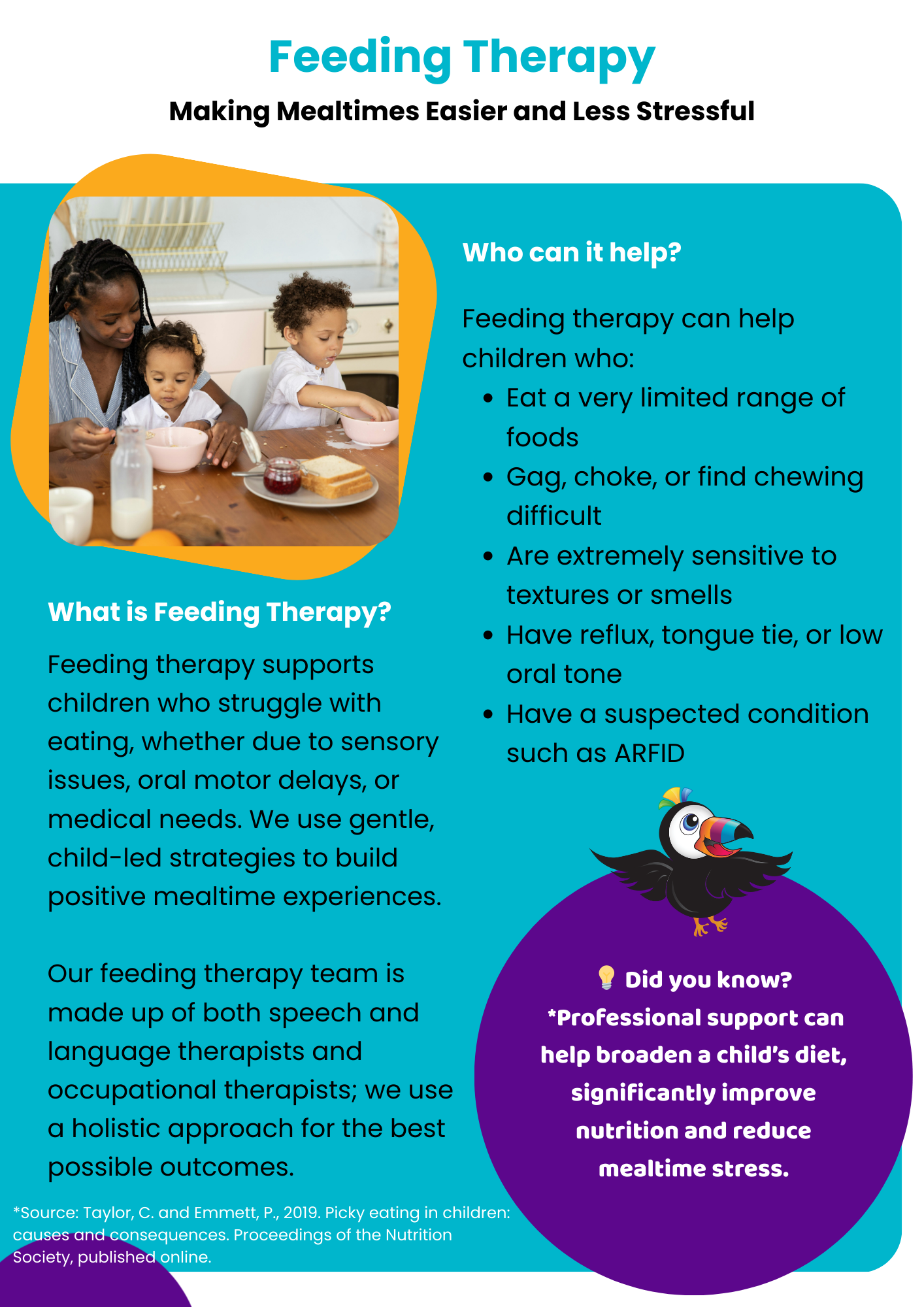
You should consider feeding therapy with Two Can Talk if mealtimes cause daily distress, or if your child eats fewer than 15–20 foods, eliminates entire food groups or textures (e.g., refusing all wet, crunchy, or mixed foods), or routinely gags, coughs, or vomits when presented with new items. While typical picky eaters usually tolerate foods on their plate and maintain adequate variety, children with underlying sensory sensitivities or oral motor difficulties feel genuine distress around food and rarely "grow out of it" without gentle, structured support.
-
Two Can Talk provides specialist paediatric feeding therapy across East Anglia (at our clinic in Mildenhall, or via home/school visits) supporting challenges including;
Weaning & early feeding: Difficulty transitioning from milk to purees, or purees to solids, as well as spoon-refusal or frequent bottle/teat distress in babies and toddlers.
Sensory food aversions & ARFID: Severe mealtime anxiety, sensitivity to food smells, textures, colors or temperatures and restricted eating patterns consistent with Avoidant/Restrictive Food Intake Disorder (ARFID).
Oral motor mechanics: Struggling to chew, tongue-thrusting food back out, swallowing difficulties (dysphagia), pocketing food in the cheeks or excessive drooling during eating.
-
Two Can Talk feeding therapy is completely child-led, gentle and low-pressure - we never force, bribe or pressure a child to eat. Our therapists use play-based sensory desensitisation and oral motor exercises to help children explore food comfortably at their own pace, moving naturally from tolerating food in the room to touching, smelling, tasting and chewing. Sessions also coach parents on practical routine changes to remove stress and conflict from the family dinner table.

“Candi has been prompt, kind and dedicated to helping us understand our autistic son and his struggles with food - we are so grateful that we can now enjoy a meal together instead of being super stressed”