
FAQ’s
-
You should consider a speech and language assessment if your child struggles to understand others, is hard to understand or feels frustrated when trying to communicate. Common signs that indicate it is time to seek support from include:
By 18–24 months: Saying fewer than 20–50 single words, not combining two words together (e.g. "more milk"), or not responding to their name and simple spoken requests.
By 2.5–3 years: Difficulty following everyday two-step instructions, speech that is unclear to familiar adults, or very limited interest in interacting and playing with others.
By 4+ years: Struggling to tell simple stories, difficulty pronouncing everyday speech sounds, stammering or getting "stuck" on words, or going completely quiet in social or nursery/school settings (selective mutism).
If your parental instincts tell you something isn't quite right, we always recommend bypassing the "wait and see" approach; early, play-based intervention makes communication far easier and less stressful for your child.
-
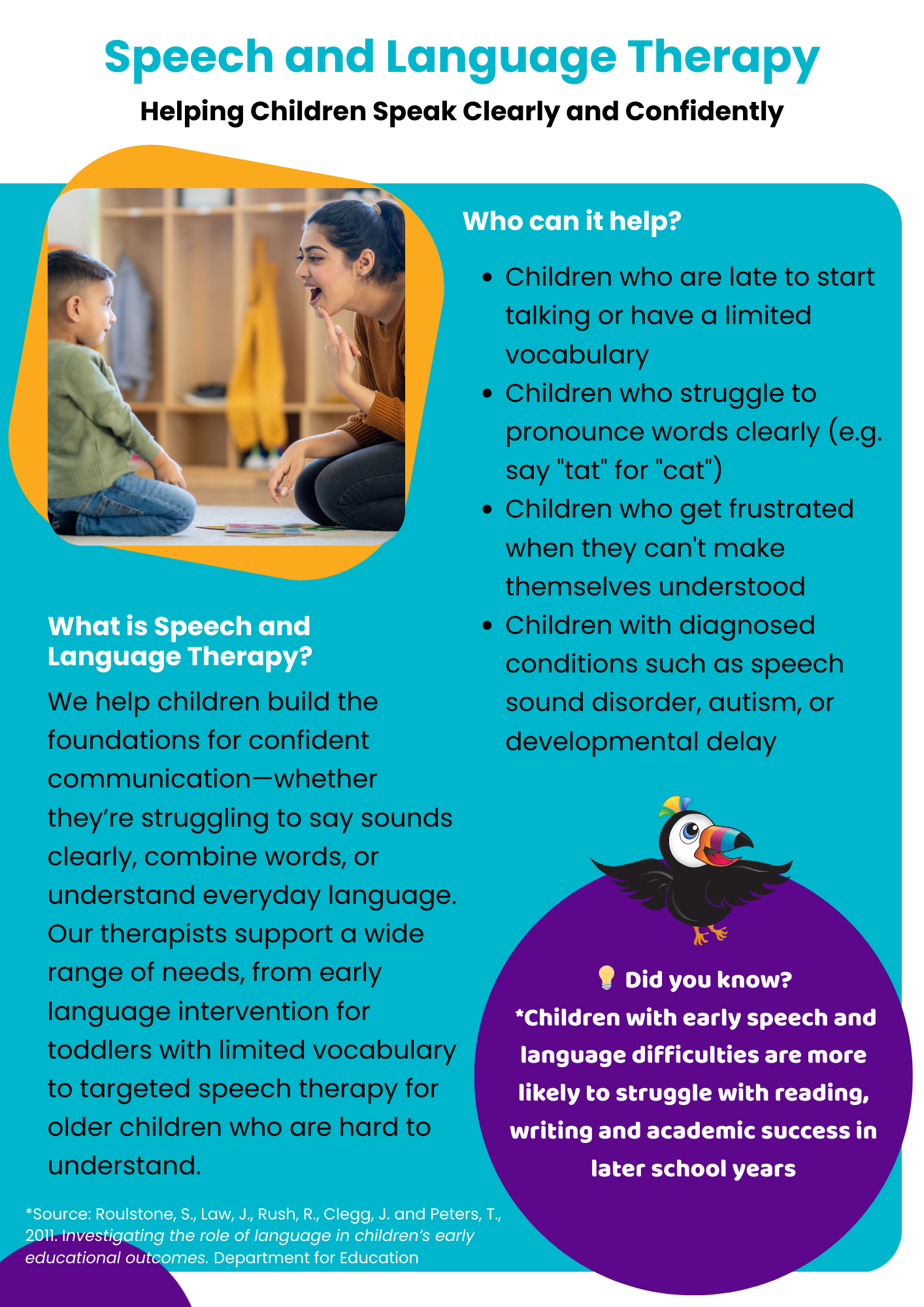
Two Can Talk sessions are child-led and play-based, using motivating games, toys and activities so that speech and language development feels fun and engaging rather than clinical. Rather than restricting families to rigid "episodes of care" (arbitrary blocks of 4–6 sessions) we provide flexible, continuous support for as long as your child needs it to truly thrive.
-
Yes, your child can receive private speech therapy from Two Can Talk while remaining on an NHS waiting list or alongside existing NHS appointments. Private therapy does not impact your NHS entitlement and our clinicians are always happy to collaborate with your NHS therapists, nursery, or school staff to ensure joined-up, consistent support.

“What we appreciate most is how Amy took the time to really understand N’s needs and narrow down what strategies and techniques work best for him. She was always encouraging and made each session engaging and productive. My son has learned so much with her not just speech, but also confidence in how he communicates.”